Manuscripts
The Book of Enoch Manuscripts
- Era
- c. 300 BC – 1st century AD (composition); manuscripts 3rd century BC – 15th century AD
- Location
- Qumran (Aramaic fragments), Egypt (Greek fragments), Ethiopia (Ge'ez complete manuscripts)
- Discovered
- Aramaic fragments recovered from Qumran Cave 4, 1952
A cluster of ancient Jewish writings — chiefly 1 Enoch — preserved most fully in Ge'ez by the Ethiopian Orthodox Church and confirmed in its earliest form by Aramaic fragments among the Dead Sea Scrolls.
The find
The "Book of Enoch" is really three distinct works that circulated under Enoch's name in ancient Judaism. **1 Enoch (Ethiopic Enoch)** is by far the most important. It is a composite of five sections — the Book of the Watchers, the Book of Parables, the Astronomical Book, the Book of Dreams, and the Epistle of Enoch — most of which were composed in Aramaic between roughly the 3rd century BC and the 1st century AD. Aramaic and Hebrew fragments of every section except the Parables were found in Qumran Cave 4 in 1952 (catalogued 4Q201–4Q212), pushing the earliest physical witness back to around 200 BC. Greek portions survive in Codex Panopolitanus (6th–8th century, Akhmim, Egypt) and the Chester Beatty–Michigan Papyrus. The complete text survives only in Ge'ez (Classical Ethiopic), copied and preserved by the Ethiopian Orthodox Tewahedo Church, where it is treated as canonical Scripture to this day. **2 Enoch (Slavonic Enoch)** survives only in Old Church Slavonic manuscripts, translated from a lost Greek original probably composed in the 1st century AD. It expands the brief Genesis 5 note that "Enoch walked with God" into a tour of the seven heavens. **3 Enoch (Hebrew Enoch / Sefer Hekhalot)** is a much later Jewish mystical text (roughly 5th–6th century AD) in which Enoch is transformed into the angel Metatron. The Qumran discoveries are the decisive piece. Before 1952 many scholars assumed 1 Enoch was a medieval Ethiopian composition. The Aramaic fragments proved that its main sections were already circulating in Second Temple Judaism, exactly the milieu in which the New Testament was written.
Why it matters
The New Testament interacts directly with 1 Enoch. Jude 1:14–15 quotes 1 Enoch 1:9 by name, attributing the prophecy to "Enoch, the seventh from Adam." 2 Peter 2:4 and Jude 1:6 draw on the Watchers tradition — angels who "did not keep their proper domain" — which is developed at length in 1 Enoch 6–16 as an interpretation of Genesis 6:1–4. Whether or not a reader treats 1 Enoch as inspired, it clearly belongs to the theological vocabulary the apostles inherited, and it illuminates how Second Temple Jews were reading Genesis. For apologetics, the manuscript evidence matters in two directions. First, it shows that texts outside the Protestant/Catholic canon can still be historically authentic and useful for context — the Aramaic Qumran fragments date centuries before the earliest complete Ethiopic copies, ruling out the older "medieval forgery" thesis. Second, it shows how the church discerned canon: 1 Enoch was widely read, quoted in Jude, and preserved by one branch of the church, yet the wider Christian tradition did not receive it as Scripture on par with the Old and New Testaments. Studying Enoch honestly helps readers see both the depth of Jewish apocalyptic thought behind the New Testament and the careful, non-arbitrary way the canon took shape.
Cross-linked Scripture
- Jude 1:14-15— Direct quotation of 1 Enoch 1:9, attributed by name to "Enoch, the seventh from Adam."
- Genesis 6:1-4— The "sons of God" and Nephilim episode that 1 Enoch 6–16 expands into the Watchers narrative.
- 2 Peter 2:4— Angels cast into gloomy chains — the Watchers tradition also reflected in Jude 6.
- Jude 1:6— Angels who "did not keep their proper domain" — the Watchers of 1 Enoch.
Read the text
Doctrine check
Sources
- ·J.T. Milik, 'The Books of Enoch: Aramaic Fragments of Qumrân Cave 4' (Oxford, 1976)
- ·George W.E. Nickelsburg, '1 Enoch: A Commentary' (Fortress Press, Hermeneia)
- ·James H. Charlesworth, ed., 'The Old Testament Pseudepigrapha' vol. 1 (Doubleday, 1983)
- ·R.H. Charles, 'The Book of Enoch or 1 Enoch' (Oxford, 1912) — public domain English translation
- ·Loren T. Stuckenbruck, 'The Myth of Rebellious Angels' (Eerdmans, 2014)
See also
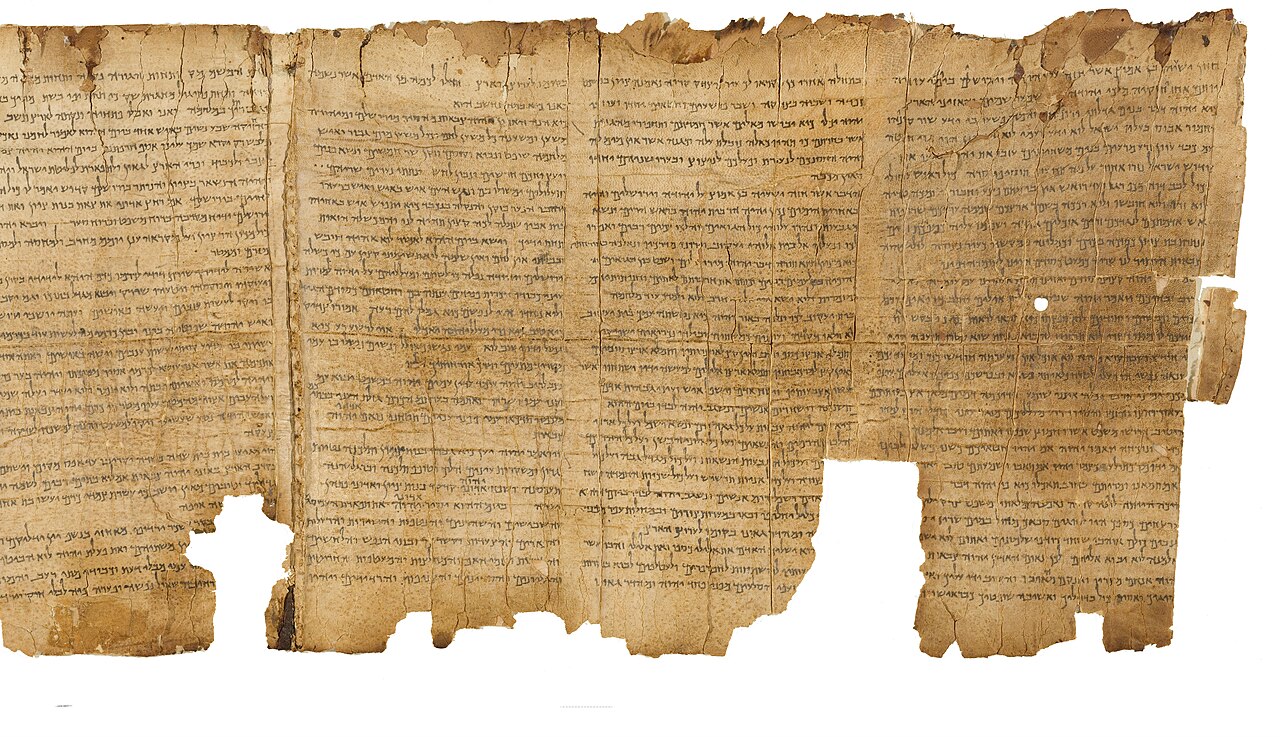
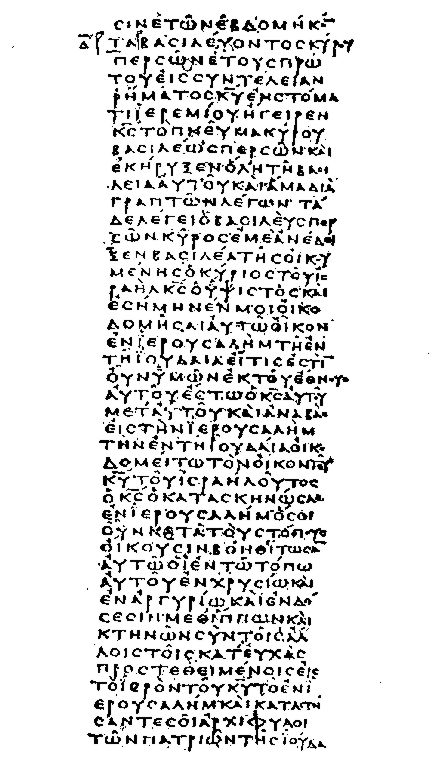
Image: AI-generated illustration inspired by ancient Ge'ez and Aramaic manuscript fragments
Discuss with AI