Archaeology
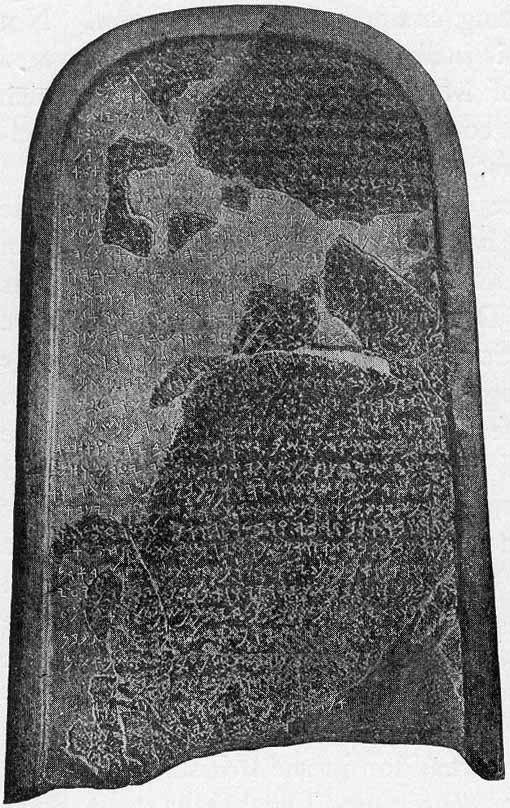
Mesha Stele (Moabite Stone)
- Era
- c. 840 BC
- Location
- Dhiban, Jordan
- Discovered
- 1868
A black basalt victory stele on which King Mesha of Moab boasts of throwing off the yoke of Israel — and, along the way, names Omri king of Israel, Yahweh as Israel's God, and (very likely) the "House of David."
The find
The Mesha Stele was found by a missionary at ancient Dibon in 1868. Written in Moabite (closely related to Hebrew), it describes Mesha's rebellion against Israel and his building projects. It mentions Omri king of Israel by name, refers to Yahweh, and (per recent re-readings by André Lemaire and others) appears to reference the "House of David."
Why it matters
Here is direct extra-biblical confirmation of the events of 2 Kings 3, of Omri as a historical king of Israel, of the worship of Yahweh in Israel, and — most probably — of the Davidic dynasty itself.
Cross-linked Scripture
Doctrine check
Sources
- ·Lemaire, A. (1994). House of David Restored in Moabite Inscription. BAR 20:3
- ·Langlois, M. (2019). The Kings, the City and the House of David on the Mesha Stele. Semitica 61
- ·Louvre: Mesha Stele catalog entry
- ·Mesha Stele (Wikipedia)
Image: Louvre Museum, Paris · Photo: Wikimedia Commons (public domain)
Discuss with AI