Science
Mitochondrial Eve
- Era
- Modern genetics
- Location
- Global (mtDNA studies)
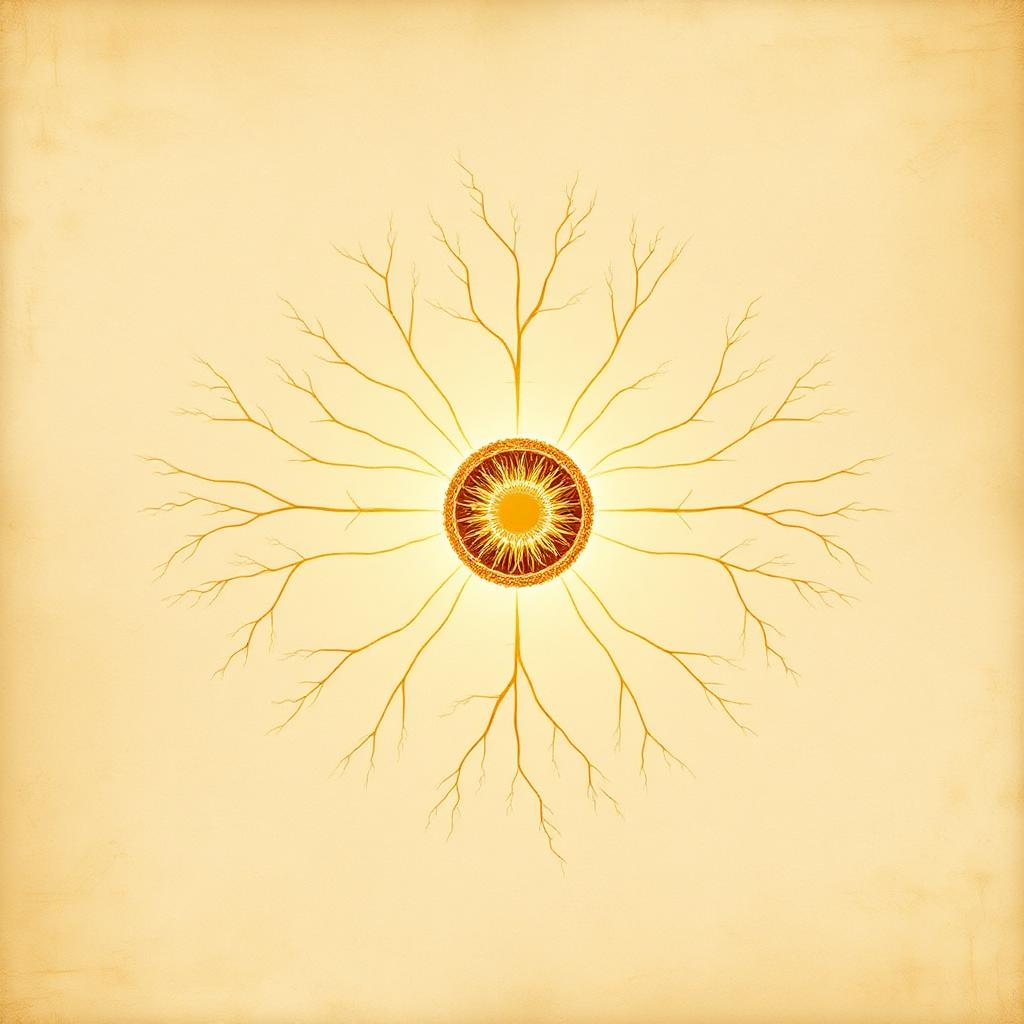
The most recent woman from whom every living human being inherits their mitochondrial DNA — a single matrilineal common ancestor for all of humanity.
The find
Every cell in your body carries mitochondria, and mitochondrial DNA (mtDNA) passes only from mother to child. By comparing mtDNA across populations worldwide, geneticists can reconstruct a maternal family tree that converges on one woman — popularly nicknamed "Mitochondrial Eve." The landmark 1987 Nature paper by Rebecca Cann, Mark Stoneking, and Allan Wilson sampled 147 people and concluded that all modern mtDNA lineages trace back to a single African woman. Decades of follow-up work with vastly larger datasets has confirmed the basic result: every human alive descends, on the maternal line, from one woman. The estimated date is hotly debated. Mainstream estimates place her between roughly 100,000 and 200,000 years ago, based on assumed mutation rates. Studies using directly observed (pedigree) mutation rates yield dramatically younger dates — in some cases on the order of several thousand years. The dating depends on which mutation rate you trust; the existence of a single matrilineal ancestor does not. Scripture has always taught a single human family: "the mother of all living" (Genesis 3:20), and "from one man he made every nation" (Acts 17:26). Modern genetics has converged on the same picture — one common mother for everyone alive — exactly what the Bible says.
Why it matters
Modern population genetics points to a single matrilineal ancestor for every person alive today. That's a striking match with the Bible's claim of one human family descended from Eve (Genesis 3:20; Acts 17:26).
Cross-linked Scripture
- Genesis 3:20— Eve, "the mother of all living."
- Acts 17:26— God made every nation from one.
Doctrine check
Sources
- ·Cann, Stoneking & Wilson, 'Mitochondrial DNA and human evolution', Nature 325 (1987): 31–36
- ·Parsons et al., 'A high observed substitution rate in the human mitochondrial DNA control region', Nature Genetics 15 (1997): 363–368
- ·Poznik et al., 'Sequencing Y chromosomes resolves discrepancy in time to common ancestor of males versus females', Science 341 (2013): 562–565
Image: Berean — conceptual illustration
Discuss with AI