History
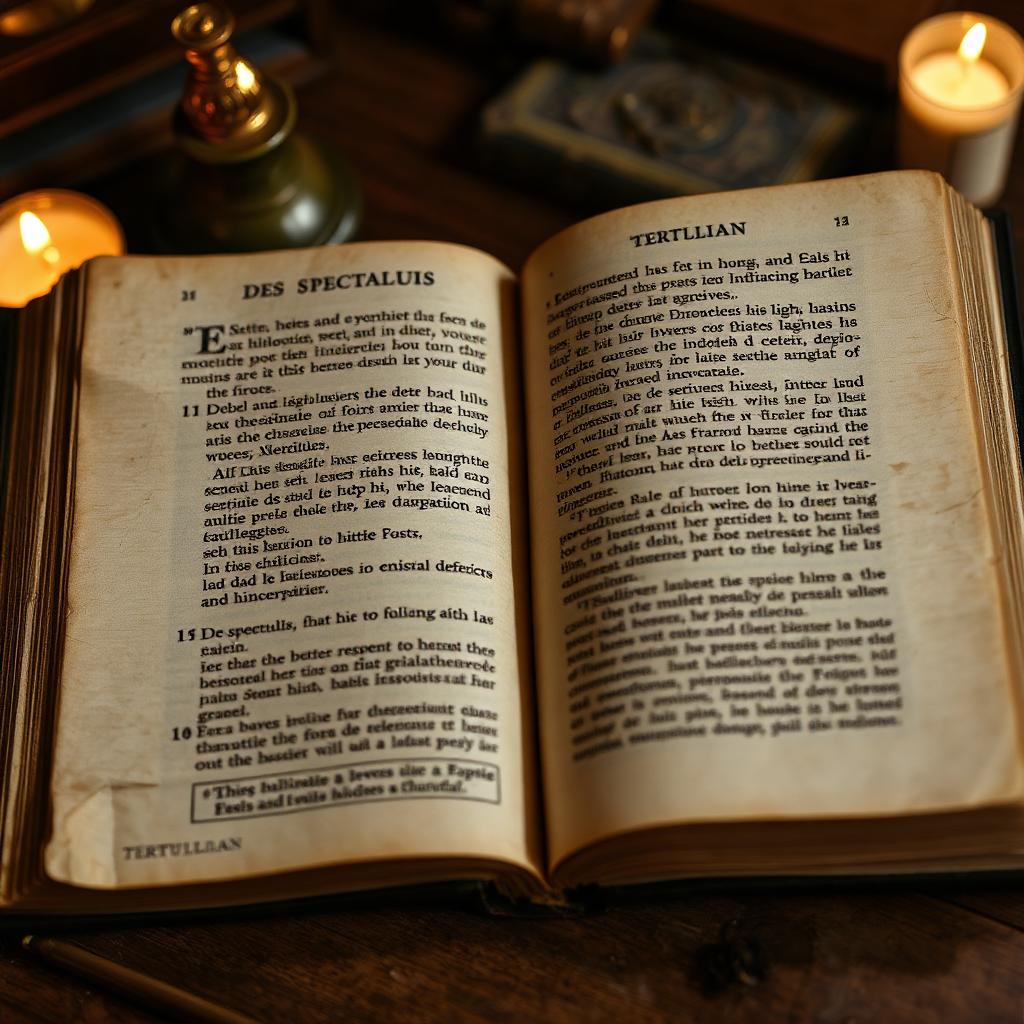
Tertullian, De Spectaculis 30
- Era
- c. AD 200
- Location
- Carthage
Tertullian, writing in North Africa around AD 200, mocks the Jewish counter-claim that "the gardener took Him away" — giving us a third independent attestation that even Jesus' opponents conceded the empty tomb.
The find
In De Spectaculis 30, Tertullian sarcastically rehearses Jewish polemic against the resurrection: "This is He whom His disciples secretly stole away, that it might be said He had risen; or the gardener abstracted, that his lettuces might come to no harm from the crowds of visitors." The "gardener" detail is a polemical twist on John 20:15 (Mary mistakes the risen Jesus for the gardener). Tertullian is writing in Latin in Carthage, far from Matthew's setting, and yet the underlying Jewish explanation is the same: the body was gone, and someone had taken it.
Why it matters
Three independent witnesses across roughly 170 years and three different regions — Matthew in Judea, Justin in Rome, Tertullian in North Africa — all report the very same Jewish counter-story. None of them is arguing *for* an empty tomb; they simply assume it and then argue over *why* it was empty. That's the hallmark of a fact that wasn't actually in dispute.
Cross-linked Scripture
- Matthew 28:11-15— Tertullian sarcastically repeats the same Jewish counter-claim — third independent attestation.
- John 20:1-9— The "gardener" detail in Tertullian is a polemical twist on John 20.
Doctrine check
Sources
- ·Tertullian, De Spectaculis 30
- ·Wright, N.T. (2003). The Resurrection of the Son of God
- ·Bauckham, R. (2006). Jesus and the Eyewitnesses
See also

Image: Illustration generated for Berean
Discuss with AI