Biblical city
Pergamum
Bergama, Türkiye · Roman Asia Minor
Pergamum was a prominent hilltop city and Roman provincial center in Asia Minor, known for its acropolis, temples, theater, and healing sanctuary. Revelation 2:12–17 addresses the church there, praising believers who held firmly to Jesus’ name amid intense pressure while warning against compromise. The archaeological remains stand near modern Bergama in western Türkiye.
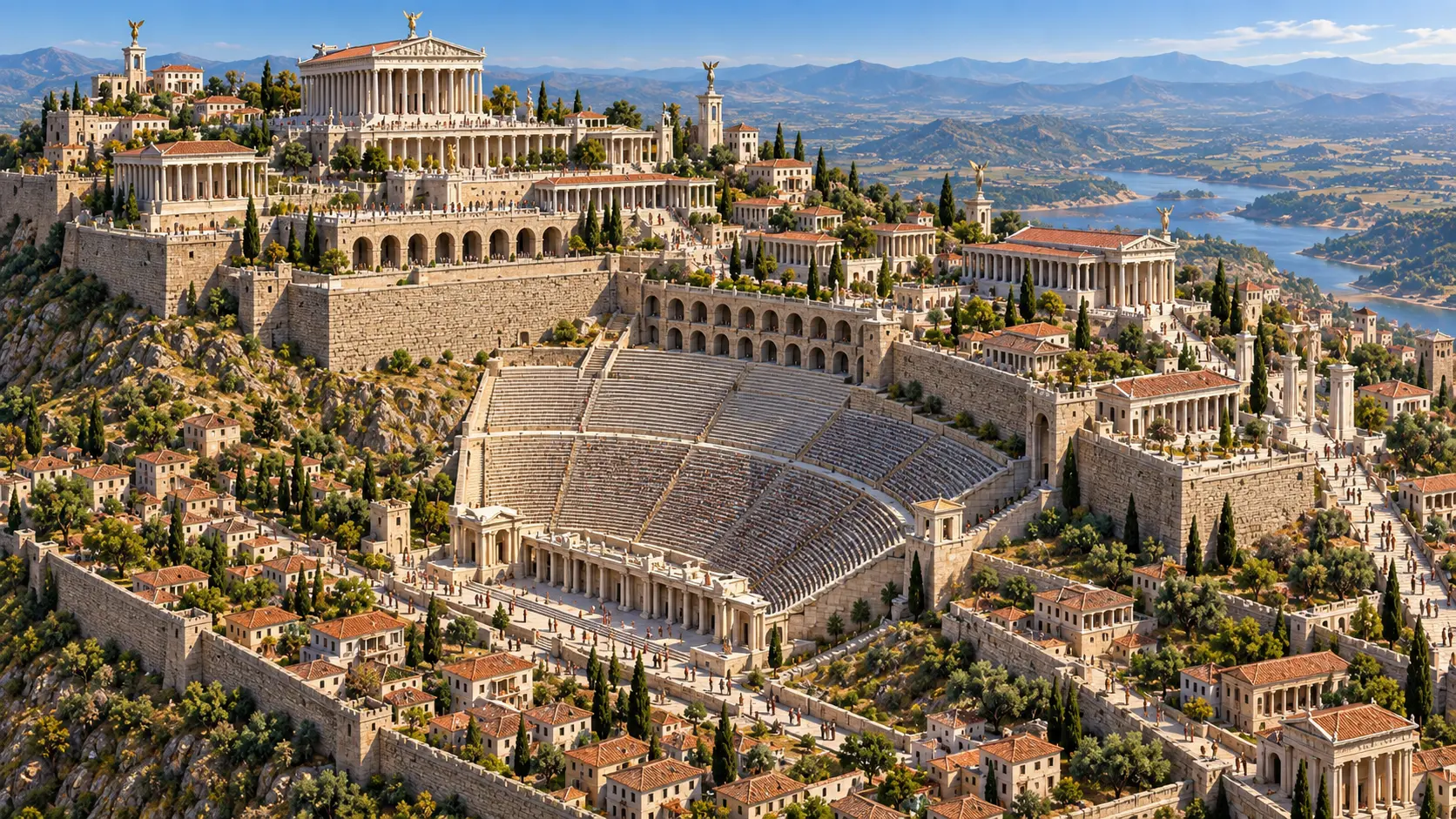
Aerial visualization of Pergamum’s acropolis, theater, temples, and surrounding city.
User-supplied original artwork
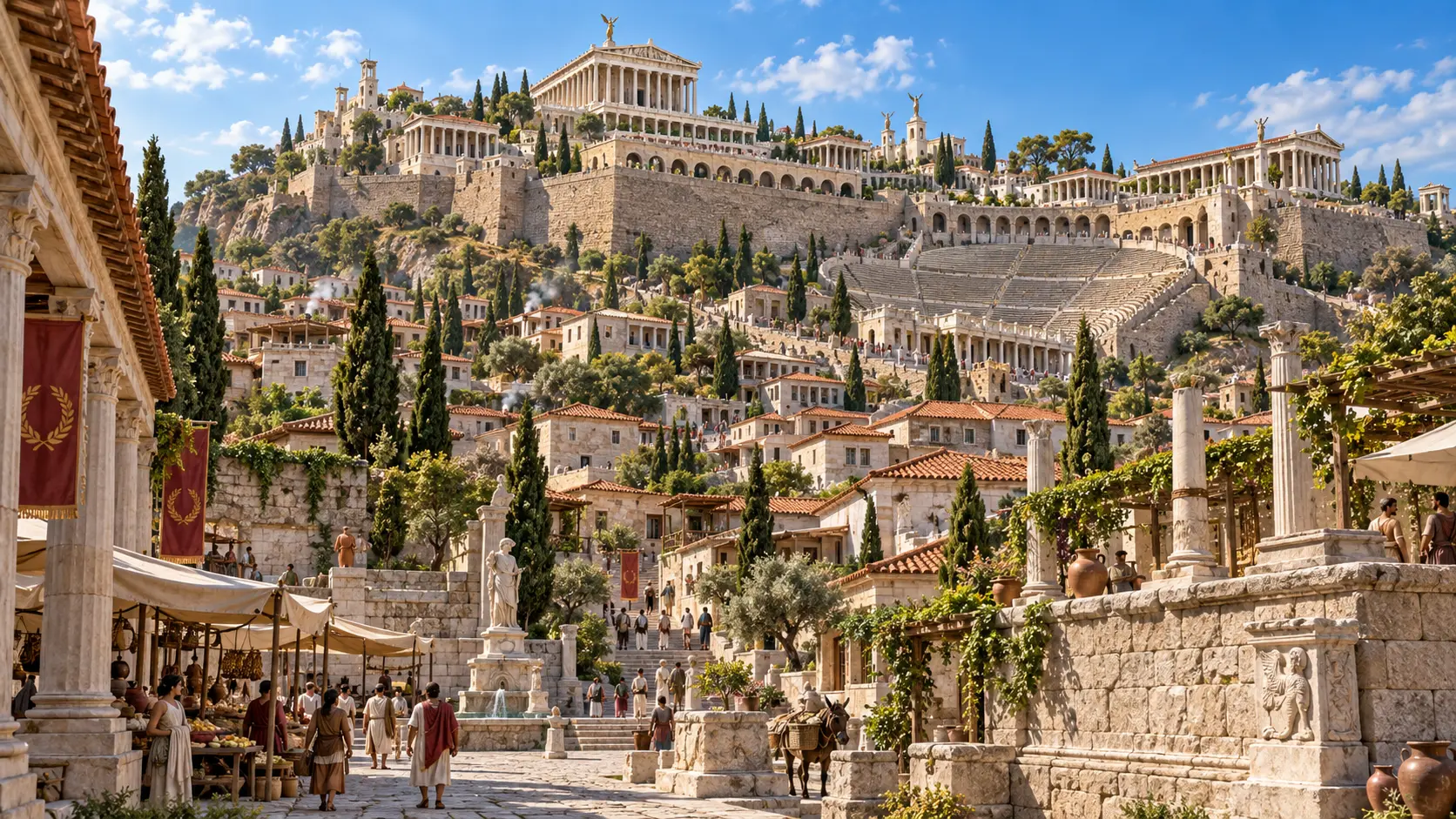
Street-level visualization of daily life below Pergamum’s acropolis.
User-supplied original artwork
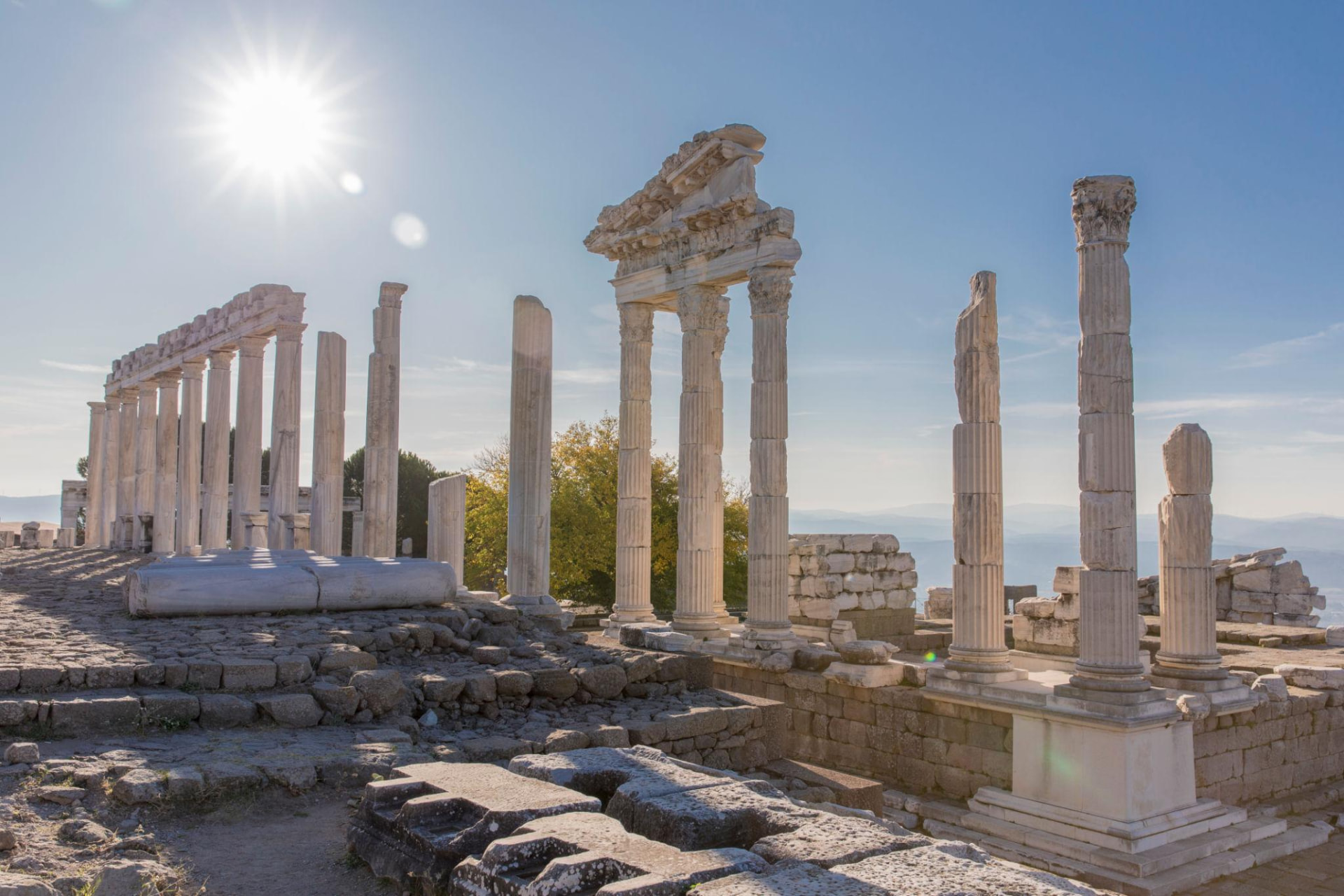
Surviving columns and architectural remains on Pergamon’s acropolis.
User-provided photograph; original photographer credit not supplied.
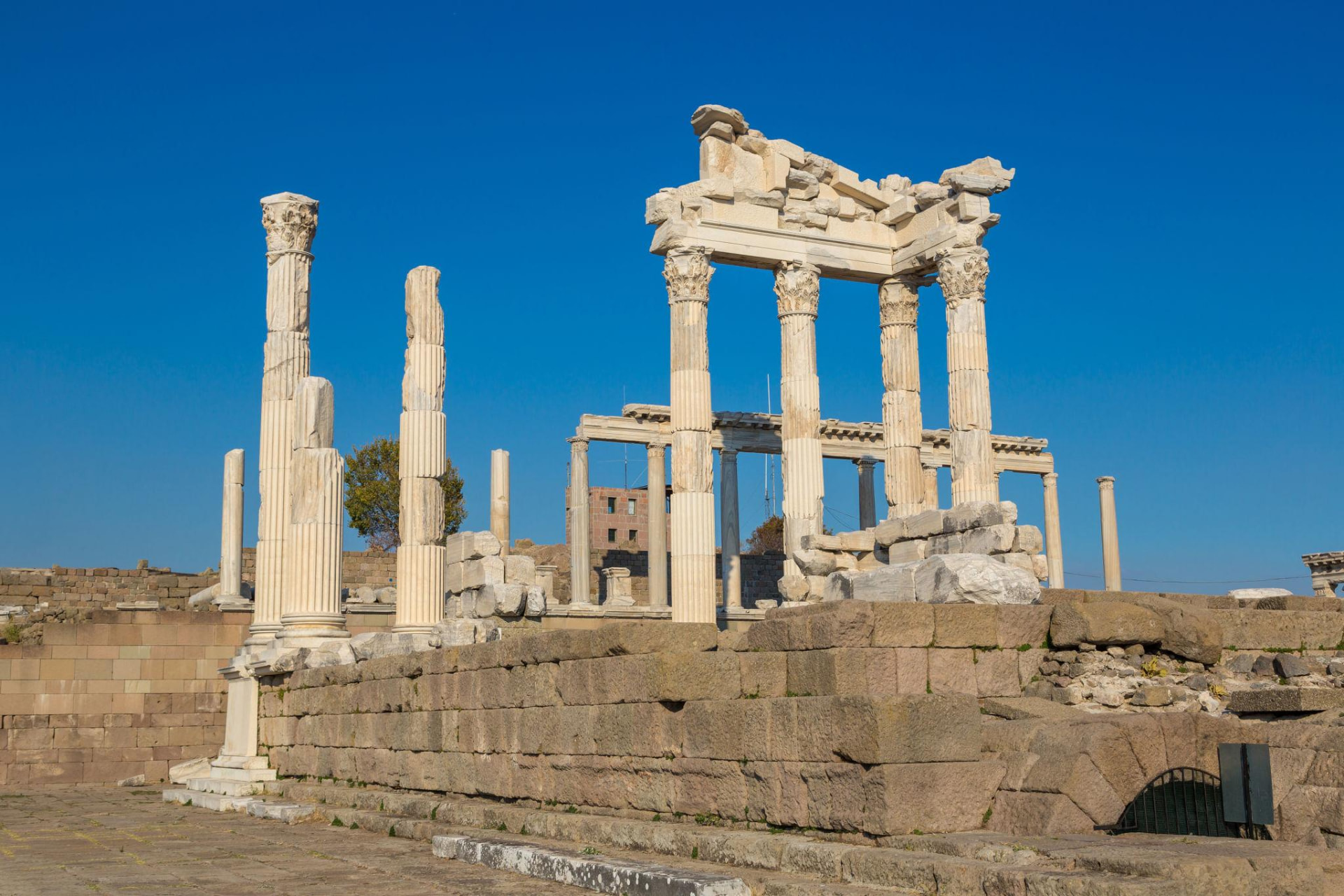
Monumental columns and temple remains on the ancient acropolis.
User-provided photograph; original photographer credit not supplied.
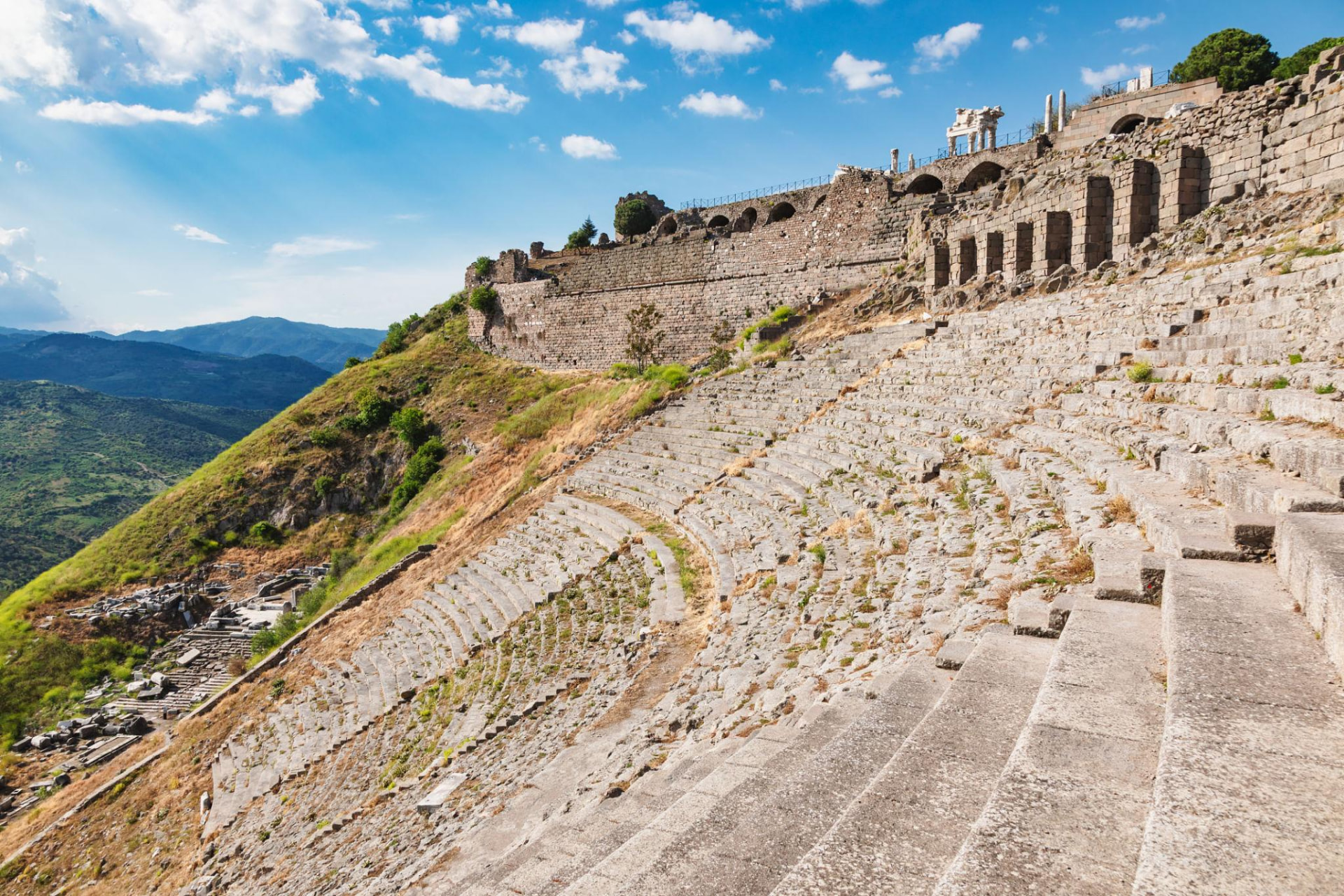
Pergamon’s steep hillside theater and the surrounding acropolis terraces.
User-provided photograph; original photographer credit not supplied.
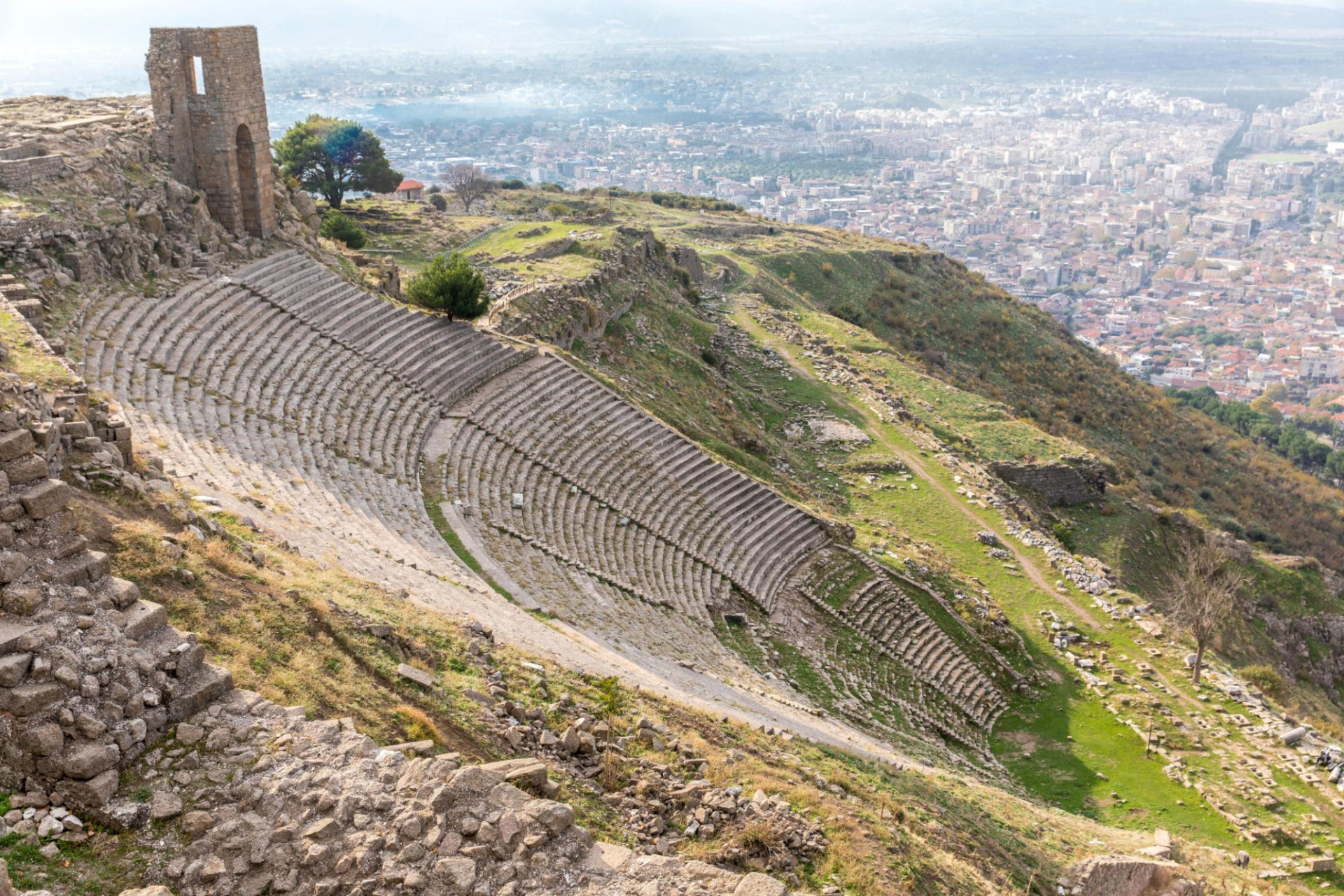
The ancient theater overlooking the modern city of Bergama.
User-provided photograph; original photographer credit not supplied.
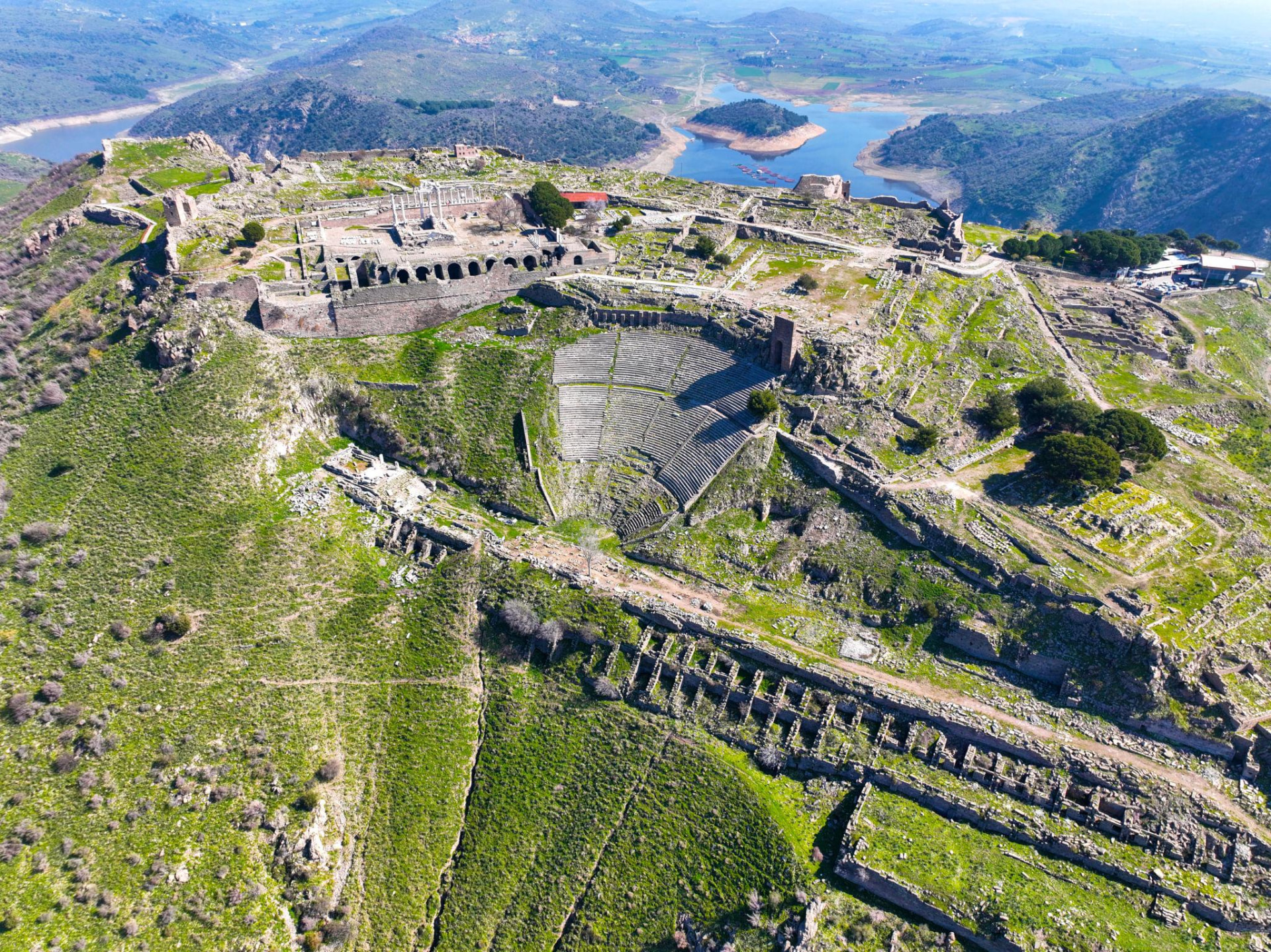
Aerial view showing the theater and principal remains across Pergamon’s acropolis.
User-provided photograph; original photographer credit not supplied.
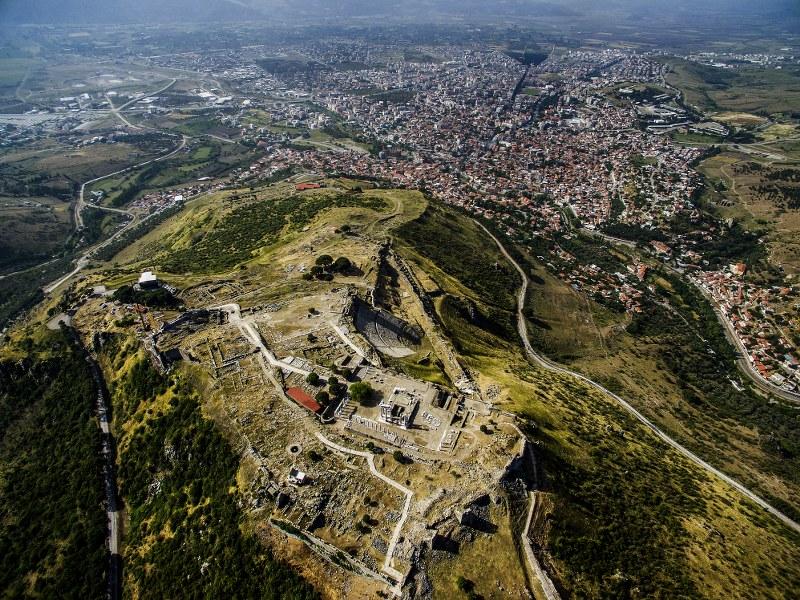
The ancient acropolis rising above modern Bergama.
User-provided photograph; original photographer credit not supplied.
History in Scripture
Capital of the Attalid kingdom and then of Roman Asia, Pergamum is the city "where Satan's throne is" in Revelation 2, commended for holding fast to Christ's name yet rebuked for tolerating false teaching. Antipas was killed there.
The ancient city
The acropolis rose steeply above the plain with a great altar of Zeus, a temple to Roma and Augustus, a library rivalling Alexandria's, and the Asklepion healing centre below.
The site today
Bergama in Türkiye is a UNESCO World Heritage Site; the acropolis, steep theatre, Asklepion and Red Basilica remain, while the Pergamon Altar is displayed in Berlin.
Key passages
Sources & notes
The supplied images are artistic reconstructions, not photographs of the archaeological site.