Ceremony
The Day of Atonement (Yom Kippur)
One day a year, one priest, one blood
The shadow (Old Testament)
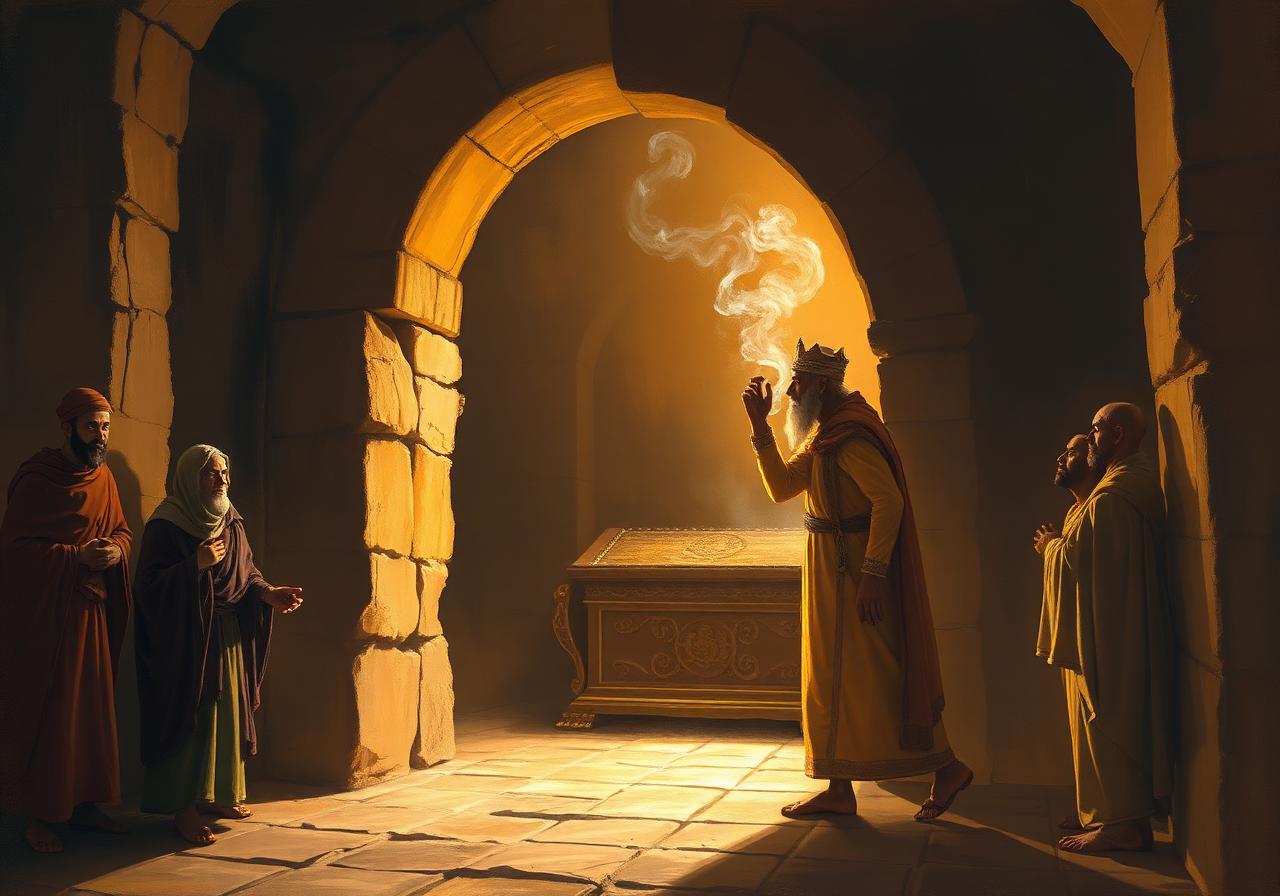
On the tenth day of the seventh month, the high priest — alone, once a year — entered the Most Holy Place. He carried the blood of a bull for his own sins and the blood of a goat for the people's sins, and sprinkled it on the mercy seat. Then a second goat — the scapegoat — was sent out into the wilderness carrying the people's iniquities away with it (Leviticus 16). Two goats, one atonement.
- Leviticus 16:1-34— The Day of Atonement
The substance (Christ)
Christ is our great High Priest who entered "once for all into the holy places, not by means of the blood of goats and calves but by means of His own blood, thus securing an eternal redemption" (Hebrews 9:12). He is both sacrifice and scapegoat — dying for our sins and bearing them away (1 Peter 2:24). One day, one priest, one blood — but this time, finished.
Apostolic commentary
Hebrews 9–10 — the centerpiece of the letter. The repeated annual sacrifices proved sin was not really removed; Christ's single offering perfects forever those being sanctified.
- Hebrews 9:11-14— By means of His own blood
- Hebrews 10:1-14— One sacrifice for sins forever
Take it in
You don't have to wait for the next Day of Atonement. Christ has already finished it.