History
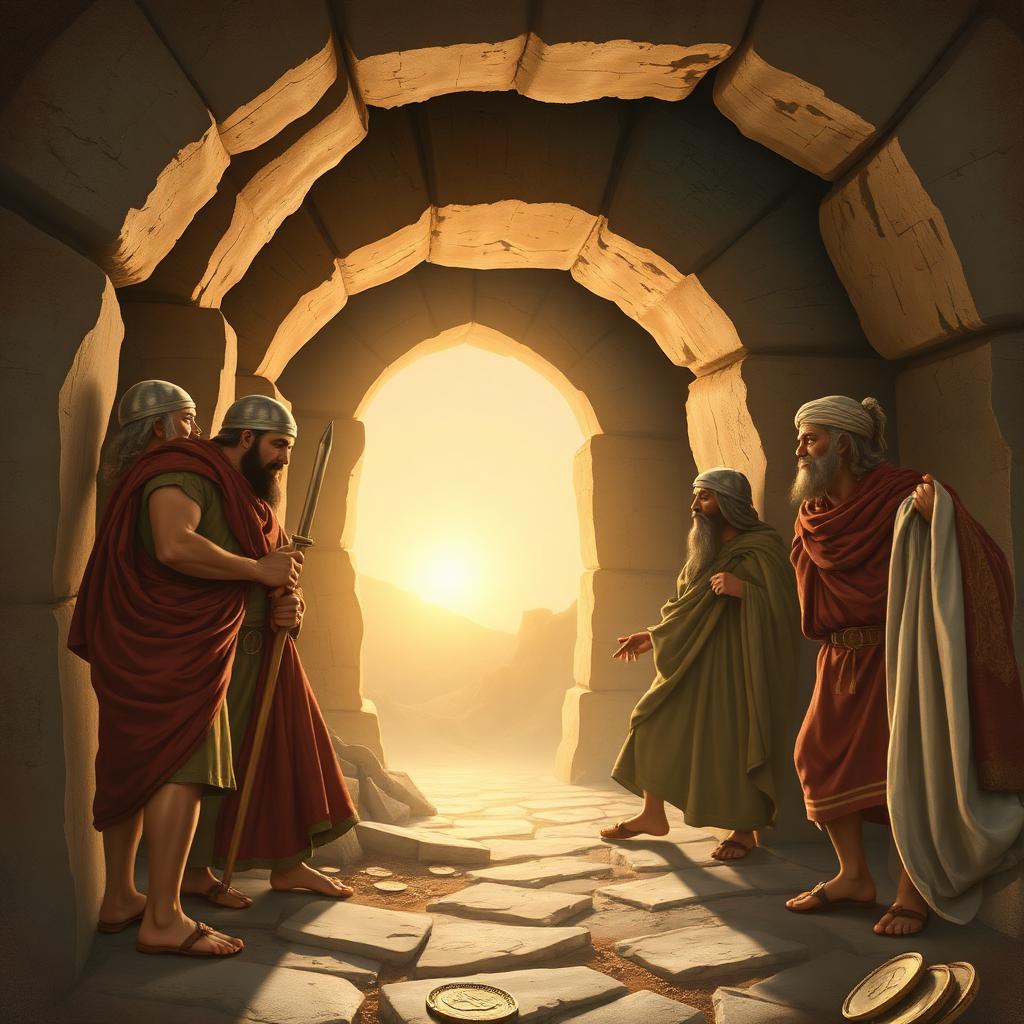
The Guards' Report (Matthew 28:11-15)
- Era
- c. AD 30 (event); written c. AD 60-80
- Location
- Jerusalem
Matthew records that the chief priests bribed the Roman guards to say the disciples had stolen Jesus' body — and adds that the counter-story was still circulating "to this day" when he wrote his Gospel.
The find
After the resurrection, Matthew 28:11-15 reports that some of the guards posted at the tomb went to the chief priests and reported what had happened. The leaders gave the soldiers "a large sum of money" and instructed them to say, "His disciples came during the night and stole him away while we were asleep." Matthew adds that "this story has been widely circulated among the Jews to this very day." The earliest Jewish counter-explanation, in other words, was not that the tomb was full but that the body had been taken — a tacit concession that the tomb was empty.
Why it matters
Hostile-witness evidence is among the strongest kinds you can have. If the opponents' best explanation *requires* an empty tomb, then the empty tomb itself is not in dispute — only how to account for it. And that same stolen-body story is independently attested by Justin Martyr (c. AD 160) and Tertullian (c. AD 200), which means it wasn't a literary invention. It was the standing Jewish reply for at least 170 years.
Cross-linked Scripture
- Matthew 28:11-15— The bribed-guards report — opponents conceded the tomb was empty.
Doctrine check
Sources
- ·Matthew 28:11-15 (NET Bible)
- ·Craig, W.L. (1989). Assessing the New Testament Evidence for the Historicity of the Resurrection of Jesus
- ·Wright, N.T. (2003). The Resurrection of the Son of God, ch. 13
See also
Image: Illustration generated for Berean
Discuss with AI