Science
Crucified Man of Givat ha-Mivtar (Yehohanan)
- Era
- c. AD 7-66
- Location
- northern Jerusalem
- Discovered
- 1968
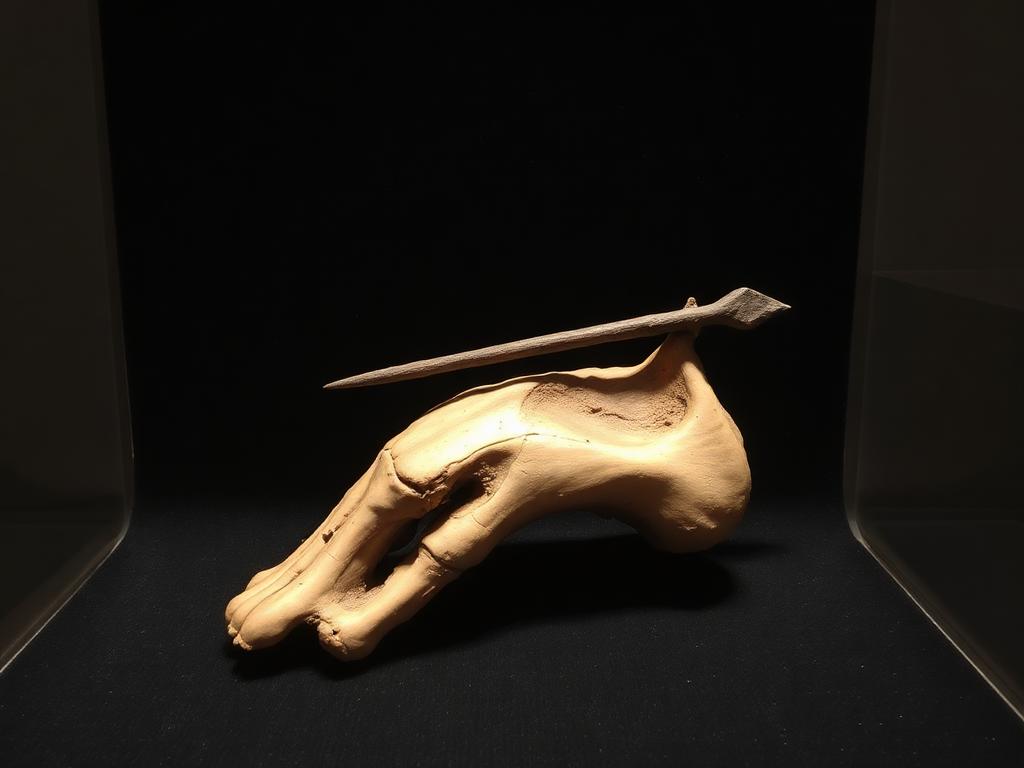
The only undisputed physical remains of a first-century crucifixion victim — a heel bone still pierced by an iron nail. It gives us direct forensic evidence of Roman crucifixion, done exactly as the Gospels describe it.
The find
In 1968 a Jewish ossuary inscribed "Yehohanan son of Hagkol" was found containing the bones of a man crucified between roughly AD 7 and 66. A 4.5-inch iron nail had been driven sideways through his right calcaneum (heel bone); a piece of olive-wood plaque was still attached. Analysis suggests the legs were fixed on either side of the upright, ankles nailed laterally.
Why it matters
For nearly 2,000 years, crucifixion was known only from written texts. Yehohanan changed that. His remains supply physical proof of the Roman practice in first-century Judea, and they also give us forensic context for the crucifixion narratives — including the breaking of the legs (John 19:31-33), which Yehohanan himself suffered.
Cross-linked Scripture
Doctrine check
Sources
- ·Tzaferis, V. (1970). Jewish Tombs at and near Giv'at ha-Mivtar. IEJ 20
- ·Zias, J. & Sekeles, E. (1985). The Crucified Man from Giv'at ha-Mivtar: A Reappraisal. IEJ 35
- ·BAR: A Tomb in Jerusalem reveals the history of crucifixion
- ·Yehohanan — heel bone find (Wikipedia)
See also