Archaeology
Pontius Pilate Ring
- Era
- 1st century AD
- Location
- Herodium, near Bethlehem
- Discovered
- found 1969; identified 2018
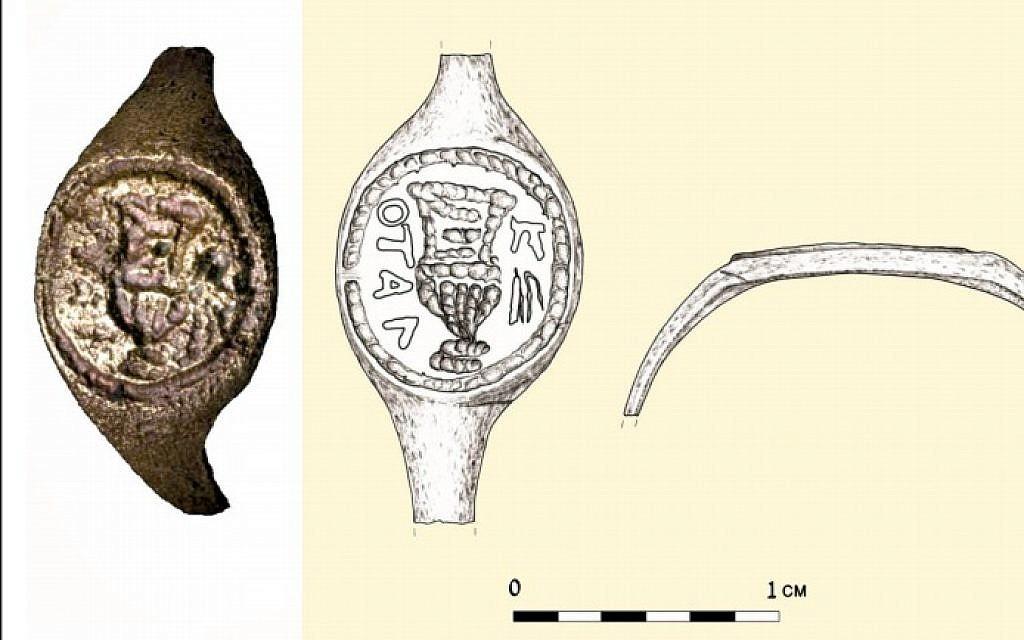
A copper-alloy signet ring inscribed in Greek with the name "Pilatus" — uncovered at the Herodium and entirely consistent with use inside Pontius Pilate's own administration.
The find
Not to be confused with the Pilate Stone (the Caesarea Maritima dedication inscription) — this is a separate artifact: a small copper-alloy signet ring, the kind an official in Pilate's administration would have used to seal documents. Excavated in 1968–69 at Herod the Great's mountain palace-fortress at Herodium and stored for decades, the ring was only fully read in 2018 after advanced RTI photography. The inscription, encircling a wine krater (mixing vessel), reads ΠΙΛΑΤΟ — "of Pilatus" in Greek. "Pilatus" is a rare cognomen in 1st-century Judea, and signet rings were standard-issue for a prefect's staff for stamping official correspondence. Scholars debate whether the ring belonged personally to Pontius Pilate or to one of his subordinates using his name to seal documents on his behalf — either way, it places the name of the prefect who condemned Jesus at a site he administered, within the exact decade of the crucifixion.
Why it matters
Here is a second independent inscriptional witness to Pontius Pilate — the first being the Pilate Stone — and this one is tied directly to the geographic area he governed.
Cross-linked Scripture
Doctrine check
Sources
- ·Amorai-Stark, S. et al. (2018). An Inscribed Copper-Alloy Finger Ring from Herodium. Israel Exploration Journal 68
- ·BAR: Pontius Pilate Ring found at Herodium
See also
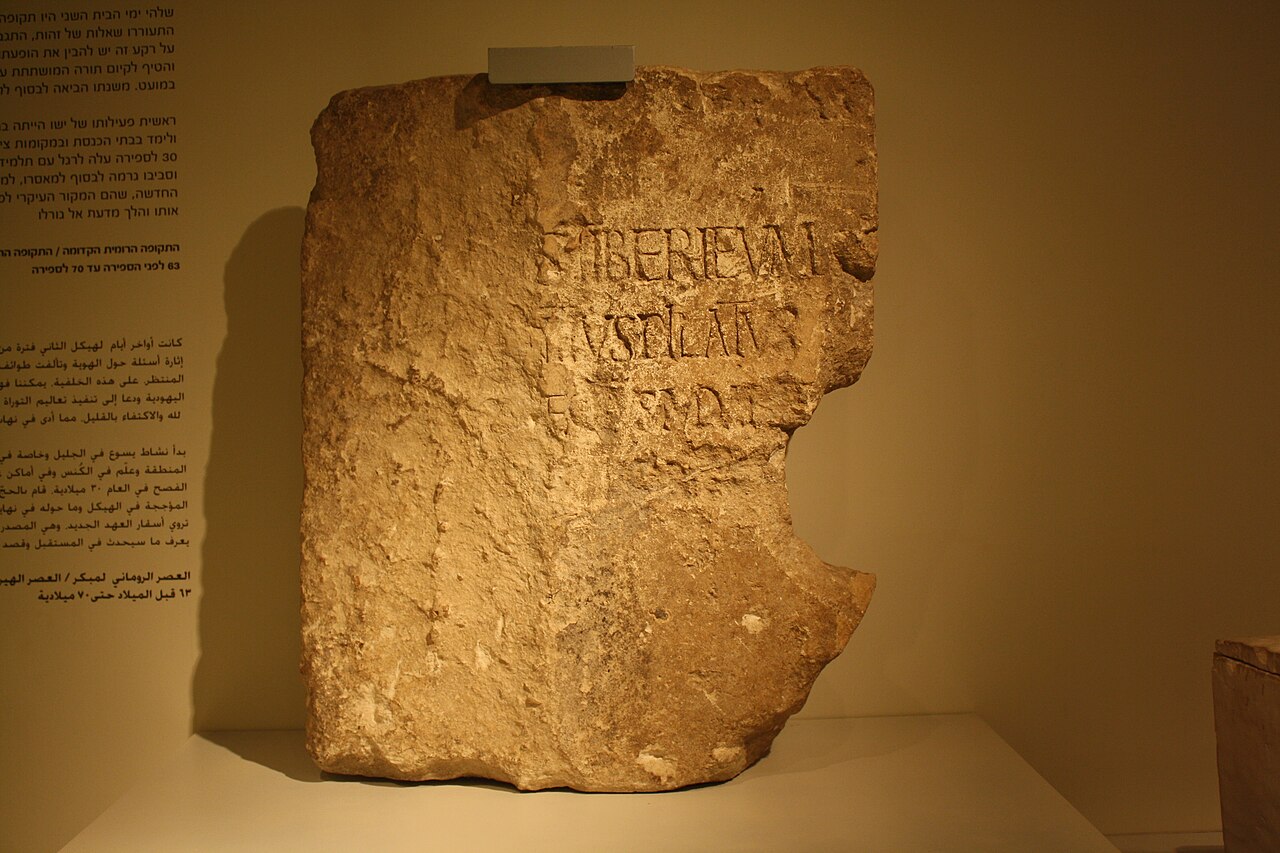

Image: Photo & drawing: Prof. Danit Levy / Herodium excavations (Hebrew University), published in Amorai-Stark et al., Israel Exploration Journal 68 (2018)
Discuss with AI